From exclusive waiting rooms to the democratization of comfort
The English word lounge originally referred to a rest or waiting room. Its transition into nightlife culture was structured in several well-documented historical stages.
-
19th-century gentlemen's clubs: In Victorian England, the gentlemen's clubs of London introduced lounge areas equipped with leather armchairs, fireplaces, and bookshelves. These were spaces designed to slow down, smoke, and discuss politics or business outside the formality of the dining room.
-
The lobbies of grand transatlantic hotels (1900-1920): With the rise of international tourism, hotels like the Ritz or the Savoy transformed their lobbies into neutral social meeting points. For the first time, men and women shared low tables for tea or appetizers before dinner.
-
The mid-20th century Cocktail Lounge era (1940-1960): After the Great Depression and World War II, commercial architecture in the United States and Europe embraced the concept of the cocktail lounge. Circular banquettes, indirect ambient lighting, and background music featuring genres like exotica, bossa nova, and cool jazz were prioritized, creating a refuge of urban sophistication.
The neuropsychology of social distances and comfort
Why does the lounge layout invite prolonged evenings? The answer lies in proxemics (the study of space usage in human interaction).
-
Seating angles and fluid conversation: Unlike traditional tables where chairs face each other at a rigid 180-degree angle, lounge furniture (L-shaped sofas, angled armchairs, and curved banquettes) arranges interlocutors at 90-degree angles. This orientation eliminates the feeling of direct confrontation and reduces visual pressure, favoring free and relaxed dialogue.
-
Body posture and emotional state: The ergonomics of low and inclined seating relaxes the back muscles. By adopting a posture of lower physical tension, the nervous system decreases cortisol secretion and increases sensory receptivity to food, drink, and company.
The experience at MY WAY: the elegance of after-dinner conversation in Barcelona
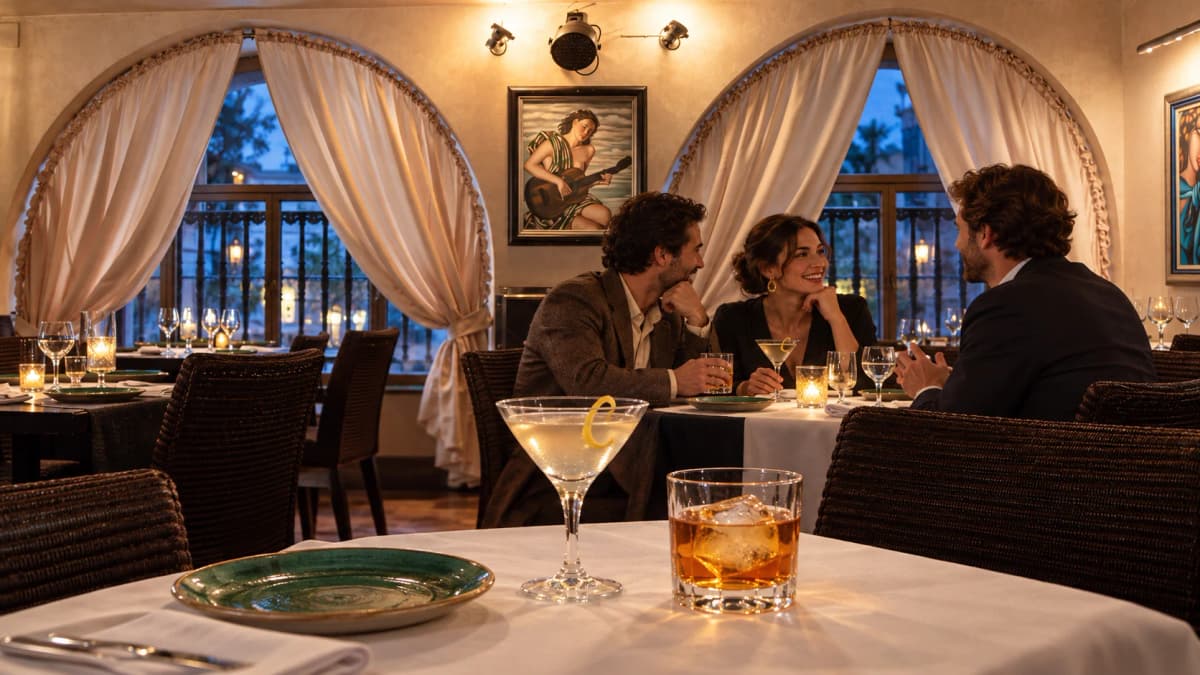
In the historic center of Barcelona, MY WAY revives this tradition of mid-century American lounge from a Mediterranean and intimate perspective.
The space becomes an ideal stage for those seeking an experience where dinner naturally merges with the night:
-
Author Mediterranean cuisine and shareable tapas: MY WAY's culinary proposal is designed for the center of the table, facilitating a social dinner where dishes combine with the fluidity of conversation.
-
Classic cocktails and an atmosphere wrapped in jazz: Its cocktail bar rescues iconic recipes and signature creations, served in a warm lighting environment and careful musical selection that invites extending the after-dinner conversation without looking at the clock.
One more reason to enjoy the evening without haste
Transforming dinner into a moment of pause, comfort, and sophisticated conversation is the authentic purpose of the lounge culture.
If you are looking for an elegant refuge in the center of Barcelona to turn an ordinary night into a special memory, MY WAY offers the perfect setting.
Reserve your table at MY WAY and experience the lounge concept in the heart of Barcelona.
