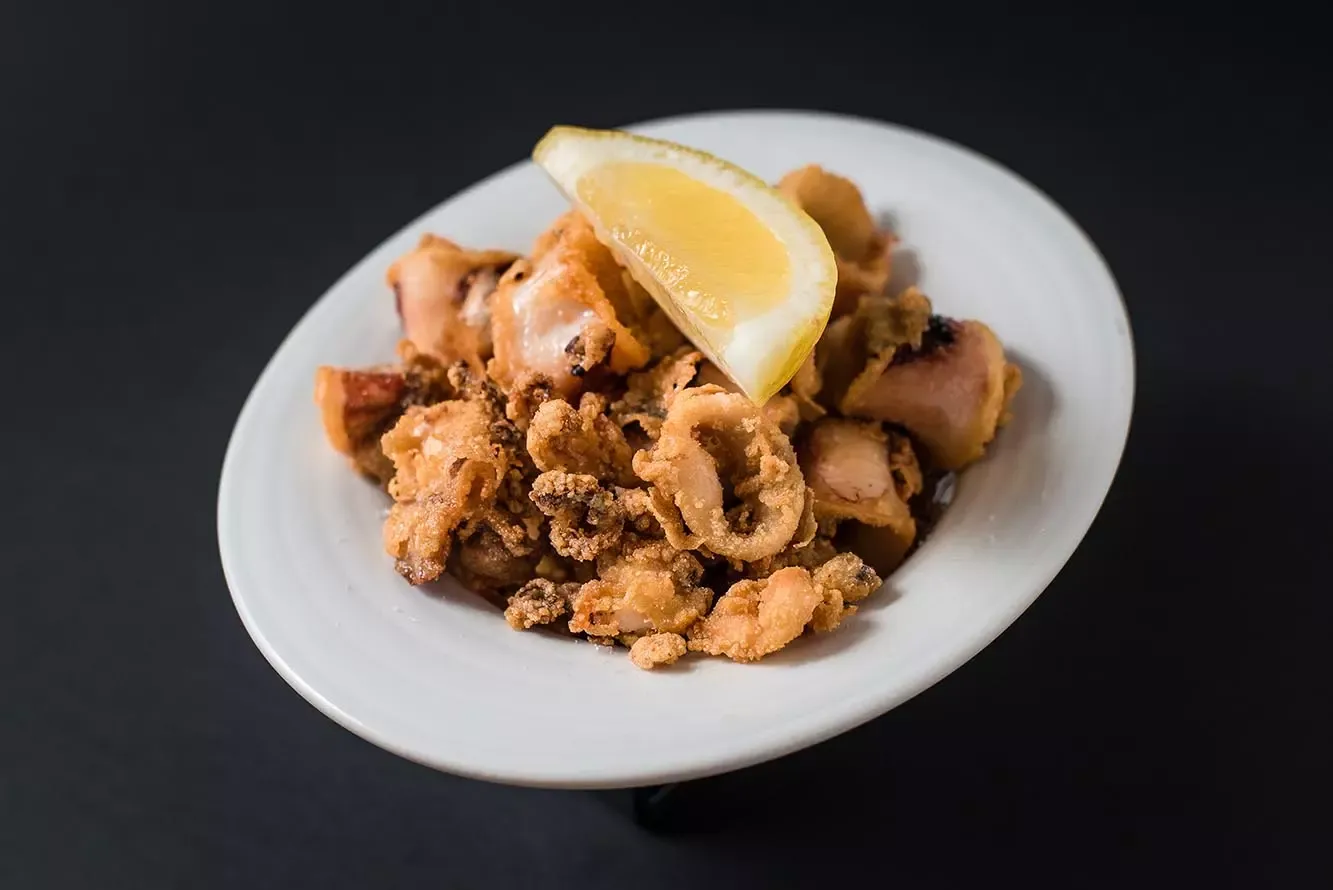
The Sacred Art of Tapas: Andalusian-Style Calamari
The sacred art of tapas is one of the most recognisable cultural aspects of Mediterranean cuisine. Today, Andalusian-style calamari stands out as one of the signature dishes that can be found year after year on the menus of many restaurants and bars across Spain and Catalonia.
A delicious appetiser to whet your appetite and pair perfectly with a refreshing drink. It’s a must-try recommendation from our restaurant and the ideal way to start any gourmet feast. In this article, we’ll uncover the main curiosities about Andalusian-style calamari.
Let’s dive in!
Origins of Andalusian-Style Calamari
While there are no exhaustive studies on the historical origins of this dish, it is known that calamari has been consumed by coastal populations since classical times, thanks to its easy catch and availability.
As history progressed, culinary techniques like frying and coating in flour began to evolve. These techniques, already used in Ancient Egypt to preserve and enhance the flavours of food, were introduced to Europe through cultural exchanges. They were often applied to fatty foods, like fish, and later served as snacks in inns.
According to popular culture, this dish is closely linked to the origins of tapas, particularly in Seville’s clubs, where patrons were served calamari alongside their drinks to help counter the effects of alcohol.
Thus, Andalusian-style calamari can be seen as a variation of Roman-style calamari, a dish enjoyed by Roman monks in the 16th century during their sea voyages to coastal areas such as Japan, China, and the East.
Differences Between Roman-Style and Andalusian-Style Calamari
The main difference between these two types of calamari lies in their preparation. Andalusian-style calamari is coated in flour before frying, whereas Roman-style calamari features a more elaborate batter made with egg, flour, milk, or beer.
However, visually, the two dishes look quite similar.
The Word "Tempura"
In the 16th century, Japanese people came into contact with Christian missionaries along their coasts. Despite disagreeing with the religion the monks preached, they observed their culinary habits, which included a dish of flour-coated calamari. The Japanese decided to call this dish "tempura."
The word "tempura" derives from the Italian term tempero (seasoning) and refers to the frying techniques used by the Portuguese to prepare fish.
Interesting Facts About Calamari
- Cephalopods are elusive creatures that can change colour to camouflage themselves.
- They have a total of 10 tentacles, 2 more than common octopuses.
- Although their ink is not toxic, it is often used in dishes like black pasta.
- Calamari have blue blood.
- Some species grow to over 12 metres long and are preyed upon by sperm whales.
- In Madrid, the famous "calamari sandwich" is a local favourite.
Conclusion
And that’s it for our insights into Andalusian-style calamari. We hope this article has given you a deeper understanding of the roots of our Mediterranean cuisine.
If you’re a lover of good food, don’t miss the chance to savour the best tapas at My Way.
