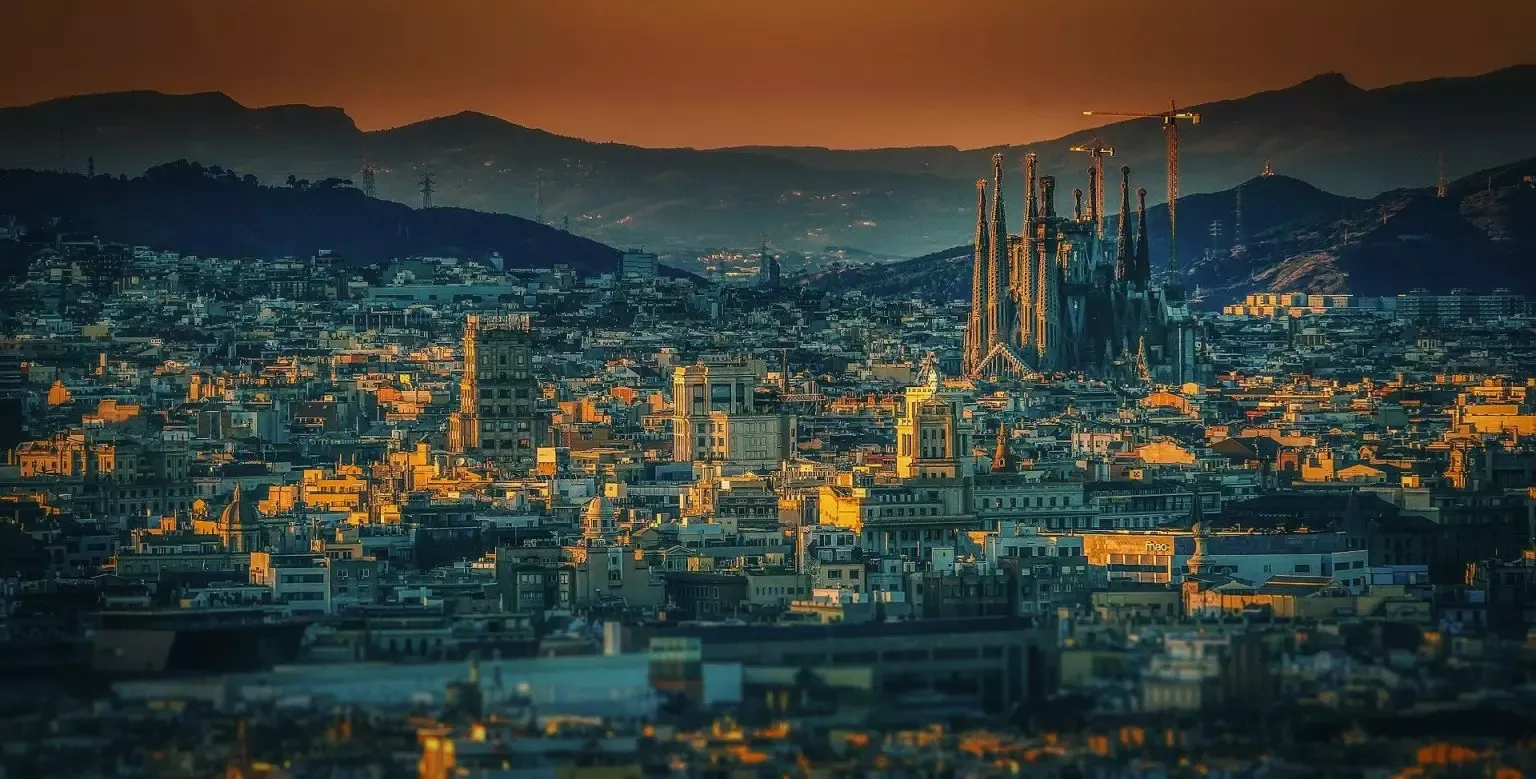
Barcelona: 8 Fascinating Facts About the City of Counts
Barcelona is one of the most cosmopolitan cities in Europe. Throughout its long streets, tourists and visitors from all over the world roam year after year, exploring its most iconic neighborhoods. The hotels and restaurants of Barcelona represent a significant attraction for the city's economy, and that’s why hospitality and Mediterranean gastronomy play a crucial role, especially when combined with a rich monumental heritage. In today’s article, we present 8 fascinating facts about the City of Counts, highlighting details even some locals might not know.
The Finger of Columbus
Near the Barceloneta neighborhood stands the famous Columbus Monument in Barcelona, pointing to the horizon with its finger. However, various studies have investigated where the hand is actually pointing and confirmed that Columbus's index finger does not precisely indicate the Indies, but rather Genoa, his birthplace. Though, in truth, his exact origins remain uncertain.
Underground Barcelona
Barcelona's railway network hides some abandoned or sealed metro stations. The transport system is quite extensive, and in some stations like Via Laietana, election posters from bygone eras still remain.
This railway network has even served as a set for films like REC and The Machinist. Interestingly, there are metro stations that do not appear on the Rodalies map.
Dragons and Maidens
Throughout Barcelona, you can find many dragon and female sculptures on the city’s facades. The dragons pay homage to the legend of Saint George, the city’s patron saint, and can be seen on buildings like Casa Amatller, Palau de la Generalitat, and Casa de les Punxes.
On the other hand, the female sculptures, especially in El Born, represent a legacy from a time when they marked the locations of brothels for visitors.
The Origin of Barcelona
There are various theories about the city’s founding and its ties to the Phoenician, Carthaginian, Iberian, and Arab civilizations. The most accepted theory suggests that the Romans founded Barcino between the 13th and 15th centuries BC as a settlement for veteran legion soldiers.
Another version attributes the founding to Hamilcar Barca, father of the famous Hannibal, who governed the territory in the 3rd century BC and may have given the city his family name.
Why It’s Called the City of Counts
Why is Barcelona known as the “City of Counts”? In ancient times, the region was divided into counties, each governed by a count. The County of Barcelona was the most important, and over time, the counties unified. The title “City of Counts” refers to this historical background.
The Olympic Beaches
Before the 1992 Olympics, Barcelona didn’t have beaches as we know them today. The coastline lacked sandy areas. However, during the Olympic Games, beaches were created along the maritime zone to beautify the city. Subsequently, the beaches became popular among tourists, and today, they still face issues of overcrowding.
Is God a Barça Fan?
One of Barcelona’s most iconic landmarks is the Basilica of Santa Maria del Mar, a 14th-century structure recognized as a cultural heritage site. Inside, it houses stained glass windows and scenes of Christianity, but one window stands out with the colors of FC Barcelona. This is because, during the Spanish Civil War, the team was one of the basilica’s sponsors following a fire.
The Vampire of Barcelona
Barcelona’s darker history includes the tale of Enriqueta Martí Ripollés, a Catalan criminal infamous for kidnapping children. She was said to prostitute them and use their blood to create healing poultices for her clients. Although doubts remain about the story’s veracity, Enriqueta died prematurely in prison.
And that concludes our collection of mysterious facts about the City of Counts. We hope this brief article, like the history of Carrer de les Heures, has helped you uncover new anecdotes about Barcelona.
