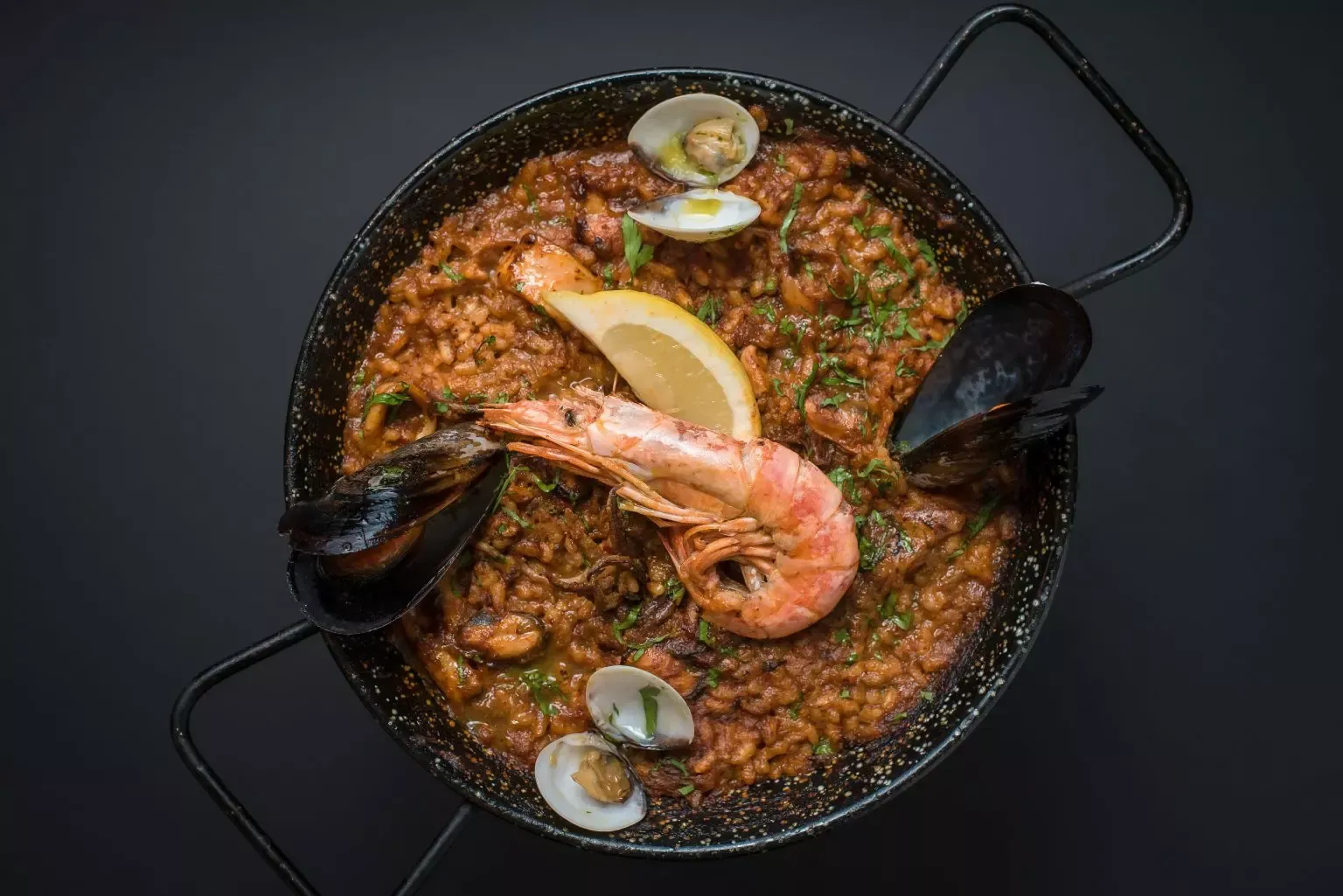
Paellas: A Mediterranean Delight at My Way
Mediterranean restaurants in Barcelona are widely known among tourists and locals for their exquisite variety of dishes and tapas. However, there is one unmistakable dish that stands out among the rest: paellas. Various gastronomic institutions, such as Turespaña, have promoted these dishes worldwide as iconic representatives of Mediterranean cuisine. Over time, paella has become a “must-do” for foreigners visiting our country year after year.
In today’s article, we’ll introduce you to our delicious paellas and share some fascinating facts about them that you may not know. Alternatively, if you want to enjoy an unforgettable experience in Barcelona, don’t miss out on our popular signature cocktails!
Paellas My Way Style
Unlike other restaurants in Barcelona, the paellas you’ll find at My Way lounge restaurant are one of the most exclusive specialties on our menu, made with high-quality ingredients and rice. The portions we offer our diners are individually prepared and cooked to order by the restaurant’s top chefs, who take equal care in their preparation, cooking, and presentation.
Whether you try our chicken, seafood, or vegetable paellas, you’ll be impressed. Every paella we serve is a unique flavor experience, combined with our own Mediterranean fusion cuisine and the special ambiance that transports you to the 1950s with a touch of Art Deco.
A Borrowed Word
The word paella has Latin roots, derived from the word “patella”, a pan used for cooking in various cultures. Other sources suggest it comes from the Arabic words “bakia” or “baella”, meaning leftovers or scraps. This relates to the Islamic custom of using leftover food from abundant dishes, combining it with rice. Many Spanish words, such as alcaldía, azúcar, and almacén, have Arabic origins, reflecting the Islamic influence on the peninsula since the 8th century.
The Origin of Paella
To understand the history of paella, we must go back thousands of years to the time of Alexander the Great, when many products began to be exported through trade routes after his campaigns in Persia. Centuries later, the Romans incorporated these products into their diet, and the introduction of rice to the Iberian Peninsula was solidified by the Muslims, who improved Roman irrigation systems. After the Reconquista, rice cultivation became popular in Valencia and other regions.
In the 15th century, King Philip II gifted Valencian rice to the Japanese embassy. From then on, various variations of “paellas” were experimented with, and a century later, the dish was officially recognized by its current name, becoming a jewel of Spanish gastronomy.
A Family Tradition
In regions like Valencia, Alicante, and Barcelona, it’s traditional for families to gather on Sundays to eat paella at home or in a restaurant. This custom has been deeply rooted for a long time, and over time this dish gained popularity among the local population.
World Paella Day
Every September 20th, this international celebration coincides with the start of rice harvesting in many towns. On this day, paella competitions known as the World Paella Day Cup are held, where participants present their culinary creations to a popular jury.
An Apple Blunder
Many internet forums criticize an incident involving Apple’s design of the paella emoji on iOS. The initial emoji depicted a seafood paella, but thousands of protests from Valencians urged Apple to modify the icon to represent the dish more accurately. Eventually, the company agreed and adapted the emoji’s design.
An Unexpected Ingredient
Originally, paella was a common dish among the middle and lower classes. Few people know that early paellas included a peculiar ingredient: Albufera rat. This rodent, which feeds on rice crops, was used as a substitute for chicken and rabbit in times of need. Although it is now a protected species, its history reflects the inventiveness of past cooks.
The World’s Largest Paella
In 1992, Valencian chef Antonio Galbis achieved a Guinness World Record by cooking the world’s largest paella, delighting over 100,000 people. The city sponsored a giant paella pan measuring 20 meters in diameter and weighing 30 tons.
That concludes our article on the extraordinary world of paellas. We hope you’ve discovered new curiosities about this delicious dish. And if you want more, don’t miss our excellent article on white wines and start your first steps as a sommelier.
