5 Essential Art Deco Artists to Understand a Style That Still Fascinates
Some styles are instantly recognisable. A clean geometric line, a sharp portrait, a luxurious yet controlled interior, or a composition that blends modernity and glamour is enough to tell us we are looking at something very specific. That is exactly what happens with Art Deco, a visual language that still captivates nearly a century later.
More than a purely artistic movement, Art Deco was a way of imagining modernity with elegance. The Metropolitan Museum of Art places its rise around the momentum of the great Exposition Internationale des Arts Décoratifs et Industriels Modernes held in Paris in 1925, the event that ultimately gave the style its name. The Victoria and Albert Museum describes it as a unique blend of luxury, geometry, decorative arts, refined materials and fascination with the modern world.
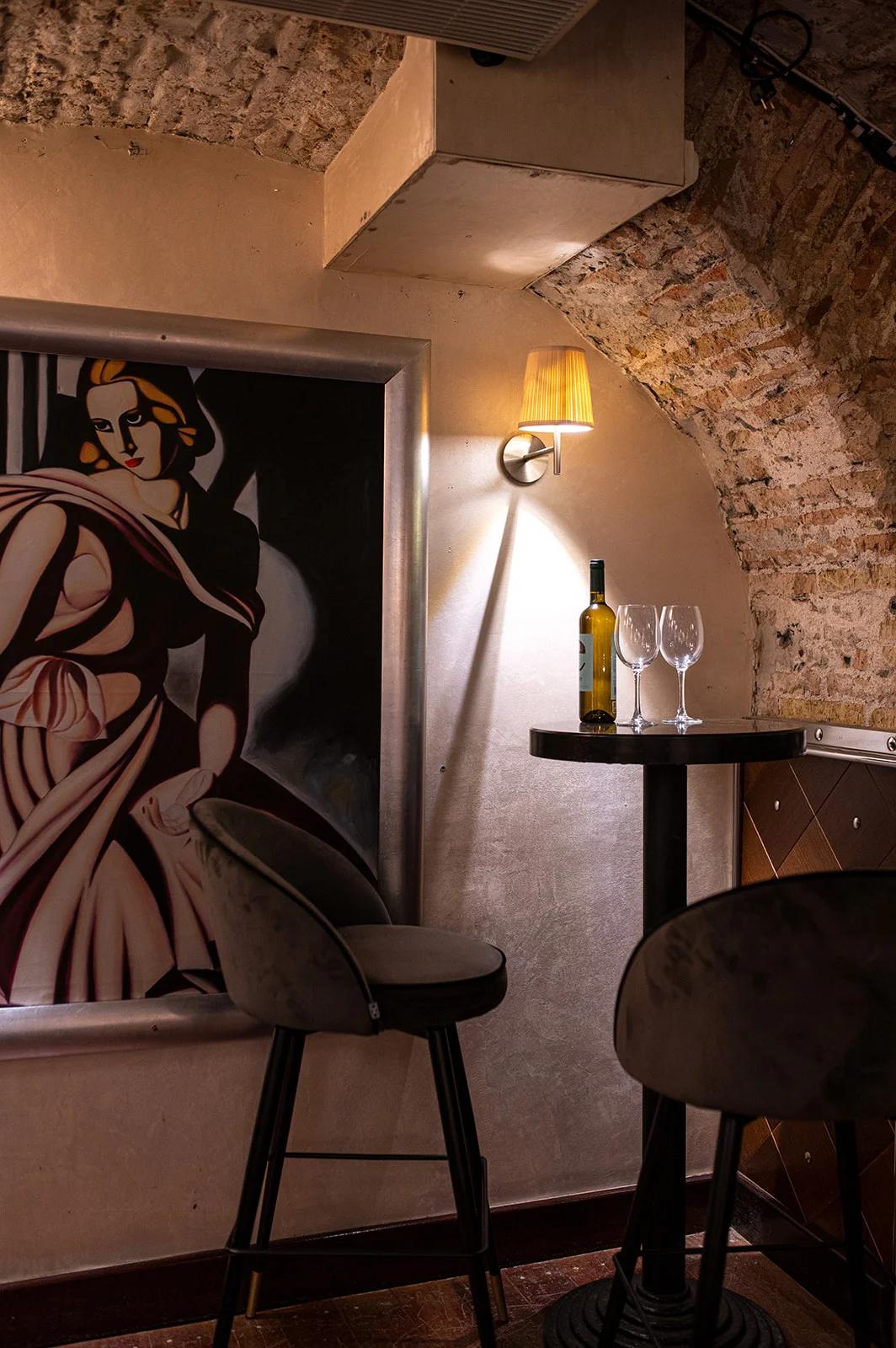
That spirit is still alive today in spaces that aim to be more than functional and instead seek to create an atmosphere. That is where My Way Barcelona fits so naturally: a lounge restaurant in the heart of the Gothic Quarter inspired by 1950s New York, Art Deco elegance, and a way of experiencing the night where the atmosphere matters just as much as what is served at the table.
What makes Art Deco so recognisable
Before talking about artists, it helps to define one basic idea: Art Deco is not just retro decoration or a collection of pretty shapes. According to the Met Museum, one of its keys is the union of decorative arts, refined materials and a modern vision of form. The V&A adds another important point: the style embraced modernity without giving up visual pleasure.
That is why Art Deco works so well in interiors, fashion, posters, object design, hospitality and dining spaces. It has presence, theatricality and the ability to turn a place into a complete experience. It does not try to disappear behind function; it wants to be noticed with balance.
- Geometry: clean lines, symmetry and stylised volumes.
- Materials: noble woods, metals, glass, lacquered finishes and glossy surfaces.
- Visual ambition: glamour, sophistication and strong scenic character.
- Modernity: love of speed, the city, fashion, cinema and progress.
Understanding these foundations helps us read its great names more clearly. It also helps explain why a restaurant like My Way can rely on that visual universe to build a distinctive identity.
1. Tamara de Lempicka: the most iconic face of Art Deco
If there is one artist capable of summing up the intensity of Art Deco in a single image, it is Tamara de Lempicka. Her name appears almost inevitably whenever people speak about portraiture, modernity, luxury and visual sophistication. She was a painter who turned elegance into something sharp, modern and deeply recognisable.
Her work stands out for portraits of aristocrats, powerful women and compositions in which form appears polished to the limit. It is not only about beauty, but also about visual control. Lempicka’s figures convey determination, magnetism and a very specific way of occupying space.
In the case of My Way, Tamara de Lempicka is especially relevant because the restaurant’s own website explains that the space includes paintings by Tamara de Lempicka as part of its Art Deco-inspired décor. That makes her more than a decorative reference: she becomes a central part of the brand’s narrative.

2. René Lalique: the master of glass and light
René Lalique is one of the essential names for understanding the material dimension of Art Deco. Although he first became famous for jewellery, the V&A considers him one of the great forces of the style because of his work in glass during the 1920s.
Lalique understood something fundamental: visual luxury depends not only on form, but also on the way an object works with light. His pieces explored contrasts between transparent and frosted surfaces, delicate textures and a formal refinement that made glass the true protagonist.
From the point of view of experience, his work teaches a useful lesson: an elegant space does not depend only on furniture or colour, but also on how it reflects, filters and dramatises light. That logic, when brought into interior design and hospitality, still feels completely current.

3. Erté: fashion, line and theatrical fantasy
If Tamara de Lempicka represents portraiture and Lalique represents materiality, Erté embodies the most graphic and theatrical side of Art Deco. The official Erté Estate website reminds us that he worked in fashion, stage design, illustration, jewellery, design and decoration. His work is a lesson in how to turn elegance into silhouette.
Erté did not simply design; he created entrances. His elongated figures, refined compositions and his treatment of the body as a visual gesture made him a reference point for what we now understand as scenic glamour. There is fashion in his work, certainly, but also a powerful sense of ceremony.
That makes him especially interesting when talking about dining and nightlife. Some spaces do not only serve food and drinks; they build a feeling of arrival, rhythm and performance. In that field, Erté’s sensibility still helps explain why Art Deco remains a synonym for sophistication.

4. Clarice Cliff: colour, geometry and everyday modernity
Art Deco was not only about nocturnal glamour or luxurious interiors. It also had a livelier, more domestic and more accessible side. That is where Clarice Cliff appears, one of the most important designers for understanding how the style entered everyday life without losing visual strength.
The V&A highlights her for ceramic designs full of colour, geometric patterns and a graphic energy that connected strongly with the taste of the period. Her pieces show that Art Deco did not need to be solemn in order to be sophisticated.
Clarice Cliff introduces a very interesting idea: elegance can also be cheerful, vibrant and approachable. That nuance is useful for spaces like My Way because it avoids an overly rigid reading of luxury and leaves room for a livelier, warmer and more social experience.

5. Émile-Jacques Ruhlmann: the great architect of elegant interiors
If one name had to be chosen to explain Art Deco interior design in its most refined form, that name would be Émile-Jacques Ruhlmann. The Met Museum presents him as one of the leading figures of French Art Deco, renowned for his work in furniture, interiors and richly refined materials.
Ruhlmann matters because he helps us understand that a well-designed interior is not a casual sum of beautiful pieces. It is a spatial narrative. His projects combined noble woods, elegant proportions, controlled ornament and a clear ambition to transform space into a statement of taste.
From a brand perspective, this idea is especially relevant. In hospitality, the interior is not a background; it is part of the product. The feeling of entering a place, looking around the room, sensing the balance of materials and noticing that everything responds to the same aesthetic logic is part of the value itself.

What these artists share
Although they worked in different media, they all share something essential: they turned elegance into a visual language. They made modernity desirable, understood the value of atmosphere and created works that are not only looked at, but mentally inhabited.
- Lempicka represents portraiture, the body and presence.
- Lalique works with light, the object and material refinement.
- Erté dramatises fashion, stagecraft and silhouette.
- Clarice Cliff brings colour, dynamism and approachable modernity.
- Ruhlmann turns interiors into a declaration of style.
That combination helps explain why Art Deco remains so alive in contemporary spaces: it is not only nostalgia, but a visual repertoire that still works whenever a place wants to build an experience with identity.
Tamara de Lempicka and the Art Deco atmosphere of My Way
This is where the article lands in My Way Barcelona. The restaurant’s official website explains that the venue offers Art Deco-inspired décor, with paintings by Tamara de Lempicka, a lounge setting and a New York-inspired spirit brought into the centre of Barcelona.
There is, however, one important point to keep clear: My Way’s public content does not list the exact names of each work or a full catalogue of the pieces displayed. So the right approach is not to invent titles, but to work with what the brand publicly confirms:
- the presence of paintings by Tamara de Lempicka,
- an explicit Art Deco inspiration,
- a lounge atmosphere,
- references to 1950s New York,
- an experience where music, cocktails, the room and gastronomy all belong to the same universe.
That is already enough to build a powerful connection. Because the experience at My Way does not depend only on seeing an artistic reference on the wall. It depends on how that visual language translates into the space: in the personality of the tables, the cosmopolitan feeling, the lighting, the music and the desire to turn dinner into an evening with character.
If you are drawn to interiors with identity, reinterpreted classic glamour and places where the atmosphere matters as much as the table, you can discover more on the restaurant page or explore My Way’s menu.
Why this topic adds real value to the My Way blog
This approach works because it avoids repeating too directly what has already been published about Tamara de Lempicka and Art Deco or about Art Deco in true My Way style. Instead, it broadens the conversation.
We are not only saying that the restaurant is beautiful or that it has a recognisable artistic reference. We are building a stronger layer: My Way is supported by an aesthetic language with history, clear references and a visual coherence that goes beyond decoration.
That strengthens brand positioning, improves the perceived value of the space and turns the restaurant’s atmosphere into a real storytelling asset.
Frequently asked questions
Which artists are essential to understanding Art Deco?
If you want a strong first introduction, names like Tamara de Lempicka, René Lalique, Erté, Clarice Cliff and Émile-Jacques Ruhlmann help explain its main dimensions: portraiture, decorative objects, fashion, colour and interior design.
What defines the Art Deco style?
Geometry, elegance, refined materials, theatricality and a sophisticated vision of modernity. It is a style that brings together luxury, design and strong visual identity.
What is the connection between Tamara de Lempicka and My Way Barcelona?
My Way’s website explains that the restaurant includes paintings by Tamara de Lempicka as part of an Art Deco-inspired décor, making the artist a central visual reference for the venue.
Can people visit My Way for the atmosphere as much as for the food?
Yes. My Way presents itself as a lounge restaurant where the experience goes beyond the table. The atmosphere, the New York inspiration, the cocktail culture and the Art Deco aesthetic are essential parts of the whole.
Sources
- The Metropolitan Museum of Art – French Art Deco
- V&A – Art Deco in the home
- V&A – Art Deco’s global influences
- V&A – Art Deco: René Jules Lalique
- V&A – Art Deco: Clarice Cliff
- The Erté Estate – About Erté
- The Met – Ruhlmann: Genius of Art Deco
- Official My Way Barcelona website
- Tamara de Lempicka and Art Deco – My Way
- Art Deco in true My Way style
